



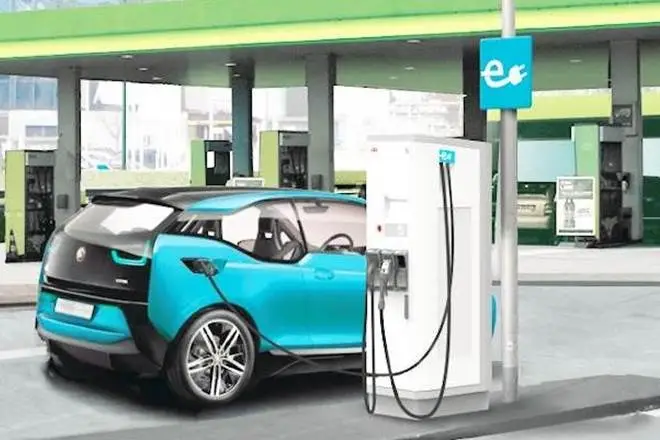
The Lifeline of a Revolution: Why EV Charging Infrastructure is India’s Tipping Point
The electric vehicle (EV) revolution is no longer a distant future for India; it is an unfolding present. We see it in the silent glide of electric scooters on city streets, in the growing presence of electric cars in showrooms, and in the ambitious policy frameworks set by the government. The conversation, however, has prematurely fixated on the vehicles themselves—their range, their cost, their design.
While these are important, this focus misses the fundamental truth of any technological transition: the infrastructure precedes the adoption. You did not have a proliferation of gasoline cars before the establishment of petrol stations. Similarly, the true catalyst for India’s electric dreams will not be the next breakthrough in battery chemistry alone, but the ubiquitous, reliable, and accessible network of EV charging infrastructure.
This is not just about convenience; it is about national strategy. Building a robust charging network is a critical imperative for India’s economic resilience, environmental survival, and geopolitical positioning. This deep dive explores the multifaceted reasons why charging infrastructure is the non-negotiable bedrock upon which India’s electric future will be built.
1. Overcoming “Range Anxiety”: The Primary Psychological Hurdle
The single greatest barrier to mass EV adoption in the consumer’s mind is “range anxiety”—the fear that the battery will deplete before reaching a destination or a charging point.
-
The Reality vs. The Perception: For the vast majority of urban and suburban Indians, daily commutes are well within the range of most modern EVs (typically 150-250 km on a single charge). However, perception dictates behavior. The absence of a visible, dense network of chargers creates a psychological barrier far greater than the technical limitation.
-
The “Mobile Phone” Parallel: In the early days of mobile phones, battery life was poor, and charging points were scarce. The proliferation of charging points—in homes, cars, offices, and public spaces—eradicated this anxiety. We now use our phones prolifically, charging them opportunistically throughout the day without a second thought. The same behavioral shift is required for EVs. A dense charging network transforms the EV from a vehicle you must meticulously plan to use, into an appliance you use instinctively.
Conclusion: Charging infrastructure is not merely a utility; it is a tool for mass psychological reassurance. It makes the EV a practical, worry-free choice for the average consumer.
2. The Economic Imperative: Fueling a New Growth Engine
India spends over $100 billion annually on crude oil imports, a massive drain on its foreign exchange reserves and a vulnerability to global price shocks. The economic case for a domestic, electricity-based transportation system is overwhelming.
-
From Imported Fuel to Domestic Electricity: Petrol and diesel are largely imported. Electricity, however, can be generated domestically from a diverse mix of sources—solar, wind, hydro, nuclear, and coal. Every kilometer driven on electricity is a kilometer not funded by imported fuel. This represents a monumental shift of capital from foreign oil fields to domestic power plants, grid operators, and charging station entrepreneurs.
-
Job Creation Across the Value Chain: The charging infrastructure ecosystem is a significant job creator. It requires:
-
Manufacturing: Jobs in producing charging hardware, components, and software.
-
Installation & Maintenance: A network of certified electricians, civil engineers, and technicians for installation, operation, and maintenance of charging stations.
-
Software & Services: High-skilled jobs in developing the platforms that manage networks, process payments, and provide real-time data to users.
-
Ownership & Operations: Opportunities for MSMEs and entrepreneurs to own and operate charging stations, much like petrol pumps, creating a new class of small business owners.
-
-
Boosting Local Manufacturing (Make in India): A guaranteed, growing domestic demand for EV chargers makes India an attractive hub for manufacturing this equipment. This aligns perfectly with the PLI (Production-Linked Incentive) schemes for advanced cell chemistry and automotive components, creating a cohesive, self-reliant EV manufacturing ecosystem.
3. Environmental and Public Health Crisis: A Breath of Fresh Air
India is home to many of the world’s most polluted cities, with vehicular emissions being a primary contributor.
-
Direct Impact on Urban Air Quality: Replacing internal combustion engine (ICE) vehicles with EVs eliminates tailpipe emissions of nitrogen oxides (NOx), particulate matter (PM2.5, PM10), and other harmful pollutants. This leads directly to cleaner air, reducing the incidence of asthma, lung cancer, and other respiratory and cardiovascular diseases. The public health cost savings are enormous.
-
The Grid Decarbonization Synergy: A common critique is that EVs simply shift pollution from the tailpipe to the power plant. While valid, this view is static. India is rapidly decarbonizing its grid with ambitious targets for 500 GW of non-fossil fuel capacity by 2030. As the grid gets greener, so does every EV charged from it. An EV charged by solar power today is near-zero emission; an EV charged by a grid with 40% renewables is 40% cleaner. This creates a virtuous cycle where a cleaner grid makes transportation cleaner, and the demand from EVs can help justify and fund more renewable energy projects.
4. Enabling Different Use Cases and User Segments
A one-size-fits-all approach to charging will not work in a country as diverse as India. The infrastructure must cater to a spectrum of needs.
-
Home Charging (The Foundation): For private vehicle owners with dedicated parking, slow charging overnight at home is the most convenient and cost-effective method. It uses existing low-tension electricity connections and leverages off-peak grid load. Policymaking must encourage this by streamlining approvals from residential societies (RWAs) and providing clear guidelines.
-
Public Charging (The Confidence Builder): These are the equivalents of petrol pumps—DC fast chargers along highways for long-distance travel and AC chargers in city centers, malls, and parking lots for top-up charging. Their visibility is key to building consumer confidence.
-
Fleet Charging (The Workhorse Enabler): The economics of commercial transport—buses, auto-rickshaws, and goods carriers—are intensely dependent on uptime. Dedicated, high-throughput charging depots are essential for the electrification of this segment, which logs high daily mileage and is a major source of urban pollution.
-
Battery Swapping (A Niche Solution): For vehicles with smaller, detachable batteries (like two- and three-wheelers) and for commercial fleets where charging time is a direct loss of revenue, battery swapping stations offer a compelling “refueling” model. The government’s recent Battery Swapping Policy acknowledges this potential.
5. The Strategic Geopolitical Advantage
The global race for EV dominance is not just about cars; it’s about control over the entire value chain.
-
Leapfrogging Dependence: The 20th century was defined by geopolitics around oil. By transitioning to an electric, digitally-managed mobility system, India has the opportunity to leapfrog its dependence on the volatile oil market and the geopolitical leverage of oil-producing nations.
-
Critical Minerals as the New Oil: The future will be shaped by access to critical minerals like lithium, cobalt, and nickel. While this presents a new challenge, a strong domestic market for EVs and charging infrastructure gives India greater bargaining power in securing these resources and investing in recycling technologies to create a circular economy, reducing long-term dependence.
The Challenges on the Road Ahead: A Call to Action
Recognizing the importance of charging infrastructure is the first step. The next is to address the significant challenges in its deployment:
-
Grid Capacity and Stability: Concentrations of fast chargers, especially on highways, can place a significant strain on the local distribution grid. This requires proactive infrastructure upgrades by DISCOMs and the integration of solutions like:
-
Energy Storage Systems (ESS): Using battery packs to draw power from the grid during off-peak hours and discharge it during peak charging times, preventing grid overload.
-
Solar Canopies: Installing solar panels at charging stations to generate clean power on-site and reduce grid dependency.
-
-
Land Availability and Power Connectivity: Securing land in prime locations with access to high-tension power lines is a major hurdle, particularly for highway stations. This requires close collaboration between central and state governments, highway authorities, and private players.
-
The Interoperability Imperative: A user must be able to use any public charger with any EV using a single, easy payment method. Mandating standards like the CCS2 (Combined Charging System) for cars and ensuring interoperability through platforms like the OCPI (Open Charge Point Interface) protocol is crucial to prevent a fragmented, user-hostile experience.
-
Financing and Viability: Setting up a charging station, especially a fast-charging one, requires significant capital expenditure. Ensuring the financial viability of these stations in the early years, before EV adoption reaches a critical mass, is essential to attract investment. Innovative business models, including demand-based tariffs and partnerships with retail outlets, can help.
Wiring the Nation for a Sustainable Future
The question is no longer if India will transition to electric mobility, but how fast and how efficiently. The speed and success of this transition will be directly proportional to the pace at which we build a intelligent, robust, and user-friendly charging infrastructure.
This is not a task for the government alone, nor for the private sector in isolation. It demands a collaborative “Squadron” approach:
-
Government: To continue providing a clear policy framework, fiscal incentives, and facilitating land and power access.
-
DISCOMs & Power Sector: To modernize the grid and support the seamless integration of this new, massive load.
-
Automotive Industry: To continue producing affordable and reliable EVs while collaborating on charging standards.
-
Charge Point Operators (CPOs) & Start-ups: To drive innovation in technology, business models, and user experience.
-
The Consumer: To adopt an open mindset and make the switch when their use case permits.
Investing in EV charging infrastructure is not an expense; it is a strategic investment in India’s economic sovereignty, environmental health, and technological future. It is the concrete and cable that will wire the nation for a cleaner, quieter, and more prosperous tomorrow. The foundation must be laid today, for the vehicles of tomorrow are already arriving.

