



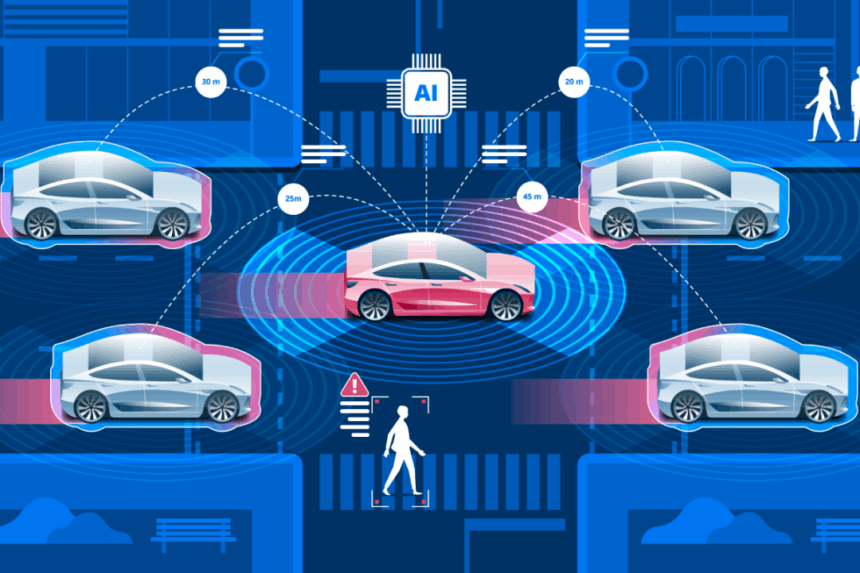
The Autonomous Indian Road: Navigating the Complex Path to Self-Driving Cars
The global narrative around autonomous vehicles (AVs) is one of sleek, silent pods gliding through meticulously planned smart cities—a vision of effortless, accident-free mobility. However, when this futuristic vision is mapped onto the vibrant, chaotic, and profoundly human tapestry of Indian roads, the picture becomes vastly more complex. The future of self-driving cars in India is not a question of if the technology will arrive, but how it will adapt, evolve, and integrate into one of the world’s most unique and challenging transportation ecosystems.
This journey will not be a sudden revolution with a flip of a switch. It will be a slow, iterative, and multifaceted evolution, progressing through clearly defined stages of automation. The path to fully autonomous vehicles on Indian highways and gullies is fraught with monumental technological, infrastructural, regulatory, and ethical hurdles. Yet, the potential rewards—in safety, efficiency, and economic transformation—are too significant to ignore. This analysis provides a comprehensive roadmap of the future of autonomous vehicles in India.
Part 1: The Staged Ascent – From Assistance to Autonomy
The Society of Automotive Engineers (SAE) defines six levels of driving automation, from Level 0 (no automation) to Level 5 (full automation). India’s journey will be a meticulous climb up this ladder.
Phase 1: The Era of Driver Assistance (Now – 2030)
-
Focus: Levels 1 and 2 Autonomy.
-
Technology: We are already in this phase. Features like Adaptive Cruise Control (ACC), Lane Keep Assist (LKA), and Automated Emergency Braking (AEB) are becoming available in premium passenger vehicles in India.
-
Indian Context: These systems face their first true test on Indian roads. ACC must handle sudden lane cuts by auto-rickshaws; AEB must distinguish between a stray dog, a pedestrian, and a plastic bag. The refinement of these Level 2 systems in the Indian environment is the critical foundational work for higher levels of autonomy. This decade will be about data collection, algorithm training, and proving reliability.
Phase 2: The Rise of Conditional Automation (2030 – 2040)
-
Focus: Level 3 and early Level 4 Autonomy in controlled environments.
-
Technology: Level 3 systems, where the car drives itself under specific conditions but requires the driver to take over when prompted, will debut on controlled-access highways. The true breakthrough will be Level 4 “geo-fenced” autonomy.
-
Indian Application: Level 4 will not appear on city streets initially. Instead, it will be deployed in:
-
Dedicated Freight Corridors: Self-driving trucks platooning on the Delhi-Mumbai Expressway.
-
Airport/Campus Shuttles: Autonomous shuttles moving people within the confines of airports, IT parks, or university campuses.
-
Last-Mile Delivery Pods: Slow-moving autonomous delivery robots in gated communities.
This phase allows the technology to prove itself in lower-risk, predictable settings while building public trust.
-
Phase 3: The Distant Dream of Full Autonomy (Post-2040)
-
Focus: Level 4 on city streets and the theoretical Level 5.
-
Outlook: Achieving full autonomy on the chaotic, unstructured roads of a typical Indian city is an AI problem of a different magnitude. It requires a vehicle to understand the unspoken communication of a traffic policeman’s hand gesture, predict the trajectory of a cow sleeping on the road, and negotiate space with a handcart. This represents a long-term horizon, likely two decades away, if not more.
Part 2: The Confluence of Challenges – The Indian Grand Prix for AVs
For AVs to succeed, they must overcome a formidable obstacle course unique to India.
2.1. The “Kaanpuri” Challenge: Unstructured and Mixed Traffic
An AV’s sensor suite and AI are trained on data. Indian traffic is a data nightmare.
-
Heterogeneous Traffic: The algorithm must simultaneously track a high-speed SUV, a swerving motorcycle with four passengers, a slow-moving tractor, an auto-rickshaw changing direction without indication, and a pedestrian jaywalking while looking at their phone.
-
Unwritten Rules: Traffic in India often operates on a fluid, negotiated system rather than strict lane discipline and right-of-way. An AV programmed for strict adherence to rules would be “bullied” and become a traffic hazard itself. The AI must learn “Indian driving logic,” a monumental challenge.
2.2. The Digital and Physical Infrastructure Deficit
AVs require a symbiotic relationship with their environment.
-
Network Dependency: Level 4 and 5 AVs rely on high-speed, low-latency 5G/6G networks for Vehicle-to-Everything (V2X) communication. While 5G is rolling out, achieving the required consistent, nationwide coverage is a long-term project.
-
Road Quality and Markings: Faded lane markings, irregular signboards, potholes, and sudden, unmarked diversions can confuse an AV’s vision systems. The first layer of autonomy requires a first-world road infrastructure.
2.3. The Regulatory and Ethical Labyrinth
India currently lacks a legal framework for autonomous vehicles.
-
The Amendment Act of 2019: The Indian Motor Vehicles Act currently requires a “driver” to be in control of the vehicle. A fundamental legislative overhaul is needed to define liability for an AV-involved accident. Is it the owner, the manufacturer, the software developer, or the sensor supplier?
-
The Ethical Dilemma: Programming an AV’s “ethics” is a global challenge, but it’s accentuated in India. In an unavoidable accident, how does the car’s algorithm choose between hitting an elderly pedestrian or swerving into a group of schoolchildren? Establishing a national consensus on these “trolley problem” scenarios is a profound philosophical and legal task.
2.4. The Socio-Economic Tsunami
The potential job displacement due to automation is perhaps the most significant social challenge.
-
Impact on Livelihoods: India has an estimated 8-10 million professional truck drivers and millions more earning a living from driving taxis, autos, and delivery vehicles. The rapid introduction of AVs could lead to massive unemployment and social unrest if not managed with a long-term vision for reskilling and social security.
Part 3: The Inevitable Drivers – Why India Will Pursue Autonomy
Despite the challenges, powerful economic and social forces will propel India toward automation.
1. The Safety Imperative:
India has one of the worst road safety records in the world, with over 150,000 fatalities annually. A significant majority are attributed to human error—speeding, distraction, drunk driving. AVs, which do not get tired, drunk, or distracted, hold the promise of reducing accidents by a staggering margin. This alone is a compelling moral and economic argument for their development.
2. Economic and Logistics Efficiency:
For a nation obsessed with economic growth, the efficiency gains are irresistible.
-
Logistics Revolution: Autonomous trucks can operate 24/7, reducing transit times, fuel consumption (through platooning), and logistics costs, which are a key component of the cost of goods in India.
-
New Mobility Models: The rise of “Transport-as-a-Service” (TaaS) with autonomous fleets could provide affordable, efficient mobility, reducing the need for private car ownership and alleviating congestion in megacities.
3. Global Competitiveness:
India cannot afford to be a bystander in the global AV race. As a hub for software engineering and a burgeoning automotive market, developing homegrown AV technology is crucial for its strategic economic interests and to avoid becoming a mere market for foreign OEMs.
Part 4: The Indian AV Ecosystem – A Unique Model for the World
India will not simply import a Western or Chinese AV model. It will forge its own path.
-
A Services-First, Not Product-First, Approach: Given the cost sensitivity of the Indian market, private ownership of Level 5 cars is a distant prospect. The real growth will be in commercial deployment—autonomous shuttle services, freight trucks, and last-mile delivery solutions. Companies like BharatBenz and Tata Motors are likely to lead in the commercial vehicle space.
-
Frugal Innovation (“Jugaad” 2.0): The solution for India may not be a lidar-covered, $100,000 SUV. It might be a lower-cost autonomous vehicle that uses a fusion of cheaper sensors, sophisticated AI, and V2X communication to achieve reliability. Indian tech startups and IT giants are well-positioned to develop the AI brain for these vehicles.
-
Public-Private Partnerships (PPP): The government’s role will be critical in creating “AV Zones” or designated corridors with the requisite digital and physical infrastructure to allow for testing and early deployment. The success of the Delhi-Mumbai Industrial Corridor (DMIC) could serve as a blueprint.
A Long and Winding, Yet Inevitable, Road
The future of autonomous vehicles in India is not a binary outcome of success or failure. It is a gradual process of assimilation. The completely driverless car navigating the bylanes of Old Delhi remains a vision for the far future. However, the building blocks are being laid today with every new car featuring a driver-assistance system.
The journey will be defined by a symbiotic relationship: the technology will have to adapt to India’s chaos, and India’s infrastructure and regulations will have to evolve to embrace the technology. The ultimate model that emerges will not be a copy-paste from Silicon Valley or Stuttgart. It will be a uniquely Indian solution—pragmatic, scalable, and built to thrive in the beautiful, unpredictable chaos that defines the nation. The autonomous vehicle on Indian roads will not just be a car that drives itself; it will be a car that understands India.

