



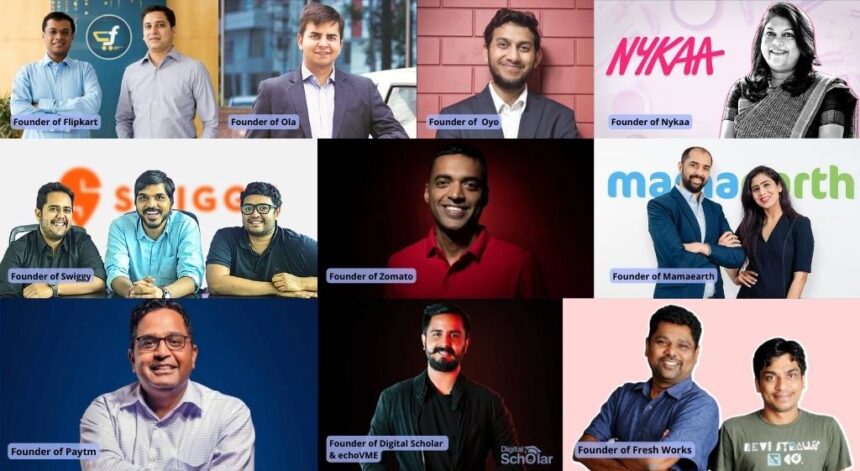
The Dhanda of Billions: 5 Unconventional Business Lessons from India’s Top Entrepreneurs
The Indian entrepreneurial landscape has undergone a seismic shift. From a protected, license-raj economy, it has exploded into a vibrant, chaotic, and fiercely competitive crucible of innovation. This transformation has been led by a new breed of visionaries—from the tech titans of Bengaluru to the self-made moguls of tier-2 cities. Their journeys are more than just inspiring success stories; they are masterclasses in building resilient, scalable, and impactful businesses in one of the world’s most complex markets.
While MBA curricula often lean on case studies from the West, there is a profound, and often overlooked, wisdom emanating from India’s own business stalwarts. These leaders have decoded the unique “dhanda” (business) of succeeding in India. Their lessons are not just about strategy and finance; they are about mindset, adaptability, and a deep understanding of the Indian psyche.
Here are 5 key business lessons, drawn from the playbooks of India’s most celebrated entrepreneurs, that can guide aspiring founders anywhere in the world.
Lesson 1: The Jugaad Mindset is a Starting Point, Not the Endgame (Embrace Frugal Innovation)
The Guru: Ritesh Agarwal, Founder & CEO, OYO Rooms
The Story:
When Ritesh Agarwal started Oravel Stays, modeled after Airbnb, he faced a fundamental problem: the Indian budget traveler’s market was fragmented, unreliable, and lacked standardisation. Instead of building expensive hotels, Ritesh employed “Jugaad.” He partnered with existing, underperforming budget hotels, branded them under the OYO flag, and standardized the bare essentials—clean linen, WiFi, and air conditioning—at a affordable price. It was a classic frugal innovation: achieving more with less. He didn’t create supply; he organized and upgraded existing, inefficient supply.
The Deep Dive:
The Western world often misinterprets Jugaad as a cheap, temporary fix. In reality, when applied strategically, it is the art of frugal innovation. It’s about stripping a product or service down to its core value proposition and delivering it in the most resource-efficient way possible.
-
Focus on the Core Need: OYO didn’t initially offer swimming pools or lavish lobbies. It focused on the budget traveler’s primary needs: predictability, hygiene, and affordability. This “no-frills” approach allowed for explosive growth.
-
Leverage Existing Infrastructure: Instead of the capital-intensive model of building hotels (like the Tatas or the Oberois), OYO used an asset-light model. This allowed for rapid, capital-efficient scaling that would have been impossible otherwise.
-
The Evolution is Key: The crucial lesson here is that Jugaad is the launchpad, not the destination. OYO didn’t stop at standardizing hotels. It invested heavily in technology, a robust app, a central booking system, and data analytics to improve customer experience and operational efficiency. It moved from frugal innovation to a tech-powered, scalable enterprise.
The Takeaway for Your Business:
Don’t let a lack of massive funding paralyze you. Ask yourself: “What is the absolute core problem I am solving, and what is the most efficient way to solve it?” Use constraints as a catalyst for creativity. Build a Minimum Viable Product (MVP), get to market quickly, and use customer feedback to iterate. However, always plan to evolve from a frugal solution to a robust, systems-driven enterprise.
Lesson 2: Think in Billions – Serve the Bharat Beyond the Metros
The Guru: Byju Raveendran, Founder, BYJU’S
The Story:
BYJU’S didn’t just create another e-learning platform. It cracked the code on making learning engaging for the Indian student. Byju Raveendran understood that to achieve massive scale in India, you cannot be confined to the English-speaking, urban elite. BYJU’S invested heavily in creating content in vernacular languages, using high-quality animation and real-life teachers to explain complex concepts. They made their app lightweight and functional even on slower internet connections, recognizing the digital reality of smaller towns.
The Deep Dive:
For decades, businesses focused on the top 100 million Indians. The real unlock has come from targeting the next 500 million—the aspirational, digitally-new India residing in tier-2, tier-3 cities and beyond. This “Bharat” has unique needs: price sensitivity, a preference for local languages, and a different cultural context.
-
Price Innovation: This isn’t just about being cheap; it’s about re-engineering the cost structure. BYJU’S pioneered a freemium model and flexible EMI options for its paid courses, making high-quality test prep accessible to a much wider audience.
-
Product Localization: True penetration requires speaking the customer’s language, both literally and figuratively. From the interface of the app to the teaching methodology, BYJU’S was built for the Indian learner’s preferences.
-
Trust as a Service: In a market where online education was a novelty, BYJU’S built trust through celebrity endorsements (like Shah Rukh Khan) and, more importantly, by delivering tangible results—improved marks and conceptual clarity.
The Takeaway for Your Business:
Are you solving a problem for a niche metropolitan audience, or for the massive, underserved heartland of your country? To achieve scale, you must de-average your customer. Understand the nuanced needs of different segments. Can you re-imagine your product, pricing, and marketing to serve this vast, often-ignored market? The biggest opportunities lie where the competition isn’t looking.
Lesson 3: Build a Moat with Culture and Capital Discipline
The Guru: N.R. Narayana Murthy, Co-Founder, Infosys
The Story:
In 1981, N.R. Narayana Murthy and six colleagues started Infosys with $250. From this humble beginning, they built not just a tech giant but a global benchmark for corporate governance and culture. Their famous “Infosys Leadership Institute” was not about teaching coding; it was about inculcating values—of meritocracy, transparency, and “powered by intellect, driven by values.” During the dot-com boom, when competitors were spending recklessly, Infosys maintained rigorous capital discipline, which allowed it to survive the subsequent bust and emerge stronger.
The Deep Dive:
In an era of “blitzscaling” and “growth at all costs,” the Infosys story is a powerful reminder that sustainable businesses are built on an unshakable foundation of ethics and financial prudence.
-
Culture as a Strategic Advantage: A strong, values-driven culture is not a poster on the wall; it’s a strategic moat. It attracts and retains top talent, builds unwavering trust with clients and investors, and guides decision-making in times of uncertainty. The famous Infosys “voice of the employee” culture empowered every individual to speak up, fostering innovation from within.
-
The “Cookie Jar” Philosophy: Narayana Murthy famously advocated for saving during good times to survive the bad. This fiscal discipline meant Infosys never faced a cash crunch. It gave them the autonomy to say “no” to dubious deals and make long-term investments without being pressured by short-term market whims.
-
Transparency as Default: Infosys was one of the first Indian companies to adopt international accounting standards voluntarily. This transparency built immense credibility with global investors and paved the way for its landmark NASDAQ listing.
The Takeaway for Your Business:
What are the non-negotiable values of your company? Are you building a culture that can sustain growth, or are you just chasing revenue? Instill financial discipline from day one. A profitable, cash-flow positive company has more control over its destiny than one reliant on the next funding round. In the long run, trust is your most valuable asset.
Lesson 4: Embrace the Pivot – Let the Market Be Your Compass
The Guru: Vijay Shekhar Sharma, Founder & CEO, Paytm
The Story:
Paytm started in 2010 as a platform for mobile recharge and bill payments. It was a useful service, but not a revolutionary one. Vijay Shekhar Sharma’s genius lay in his ability to pivot aggressively based on market shifts. When demonetization hit India in 2016, he saw a once-in-a-lifetime opportunity. Paytm mobilized its entire workforce, launching a massive marketing campaign to position itself as the primary digital wallet solution for a cash-starved nation. User growth went parabolic. But the pivots didn’t stop there. Seeing the rise of UPI, Paytm seamlessly integrated it into its app, evolving from a closed wallet to an open payments platform. It then expanded into banking (Paytm Payments Bank), e-commerce, ticketing, and wealth management.
The Deep Dive:
Stubbornly sticking to an initial idea in the face of contrary market evidence is a recipe for failure. The most successful Indian entrepreneurs are incredibly agile, treating their initial business model as a hypothesis to be tested and adapted.
-
Obsess Over Market Shocks: Demonetization was an external shock. While others were analyzing, Paytm was acting. Successful entrepreneurs have a bias for action and see regulatory changes, new technologies, or social shifts not as threats, but as opportunities to reorient their business.
-
Build a Platform, Not Just a Product: Paytm’s vision expanded from being a “payments product” to a “financial services ecosystem.” This platform approach creates multiple revenue streams and makes the business more resilient. A user who comes for mobile recharge can be cross-sold insurance, mutual funds, or movie tickets.
-
Don’t Fall in Love with Your Code, Fall in Love with the Problem: Paytm was never just about a digital wallet; it was about solving the problem of financial access and convenience. This problem-centric view allowed it to adopt new technologies (like UPI) even when they competed with its own legacy systems.
The Takeaway for Your Business:
Are you listening to your customers and the market, or are you just executing your original plan? Be prepared to pivot. Build a company culture that is agile and responsive to change. Focus on the core problem you are solving, and be willing to change your solution as the market evolves. Rigidity is a luxury startups cannot afford.
Lesson 5: Profitability and Purpose are Two Sides of the Same Coin
The Gurus: The Tata Group (Legacy) & Zoho Corporation (Modern)
The Stories:
The Tata Group, for over 150 years, has operated on the principle that the community is not just another stakeholder, but the very purpose of the existence of industry. From building the city of Jamshedpur to its pioneering employee welfare schemes, Tata’s legacy proves that a company can be wildly profitable while holding a deep commitment to social responsibility.
In the modern context, Zoho Corporation, co-founded by Sridhar Vembu, is a powerful example. Vembu has deliberately set up offices in rural Tamil Nadu, tapping into non-metro talent and revitalizing local communities. Zoho invests in training students from local villages, turning them into software developers. This is not charity; it’s a sustainable business model that provides Zoho with a loyal, talented workforce at a lower cost, while fulfilling a larger social purpose.
The Deep Dive:
The myth of the cut-throat capitalist who succeeds by crushing the competition is being replaced by the model of the “conscious capitalist.” In an interconnected world, businesses that ignore their social and environmental impact do so at their own peril.
-
The Talent Magnet: A new generation of employees wants to work for companies that stand for something more than just profits. A strong sense of purpose is a powerful tool for attracting and retaining the best talent.
-
Building Long-Term Trust: Companies like Tata enjoy a level of brand trust that no amount of advertising can buy. This trust translates into customer loyalty, smoother government relations, and resilience during crises.
-
Sustainable Business Models: Zoho’s rural development centers are not a CSR project; they are a core part of its talent and operational strategy. This aligns social good with business good, creating a virtuous cycle that is incredibly durable.
The Takeaway for Your Business:
Ask yourself: What is the larger purpose of my company beyond making money? How is my business making a positive impact on my employees, my community, and my environment? Weaving purpose into your business model isn’t just ethically right; it’s a smart, long-term business strategy that builds an unassailable brand and a sustainable enterprise.
Conclusion: The New Indian Playbook – Ambition with Anchors
The collective wisdom of India’s entrepreneurial giants provides a robust playbook for the 21st century. It champions:
-
Ambition that thinks in billions, not millions.
-
Innovation that is frugal and focused on the core problem.
-
A Foundation built on culture, ethics, and capital discipline.
-
Agility to pivot and adapt to a rapidly changing world.
-
A Conscience that aligns profit with purpose.
These lessons are not confined to India. They are universal principles, refined in one of the world’s most challenging and rewarding markets. The “dhanda of billions” is, ultimately, about building businesses that are not only successful but also sustainable, scalable, and significant. For any entrepreneur, anywhere, that is a lesson worth learning.

