



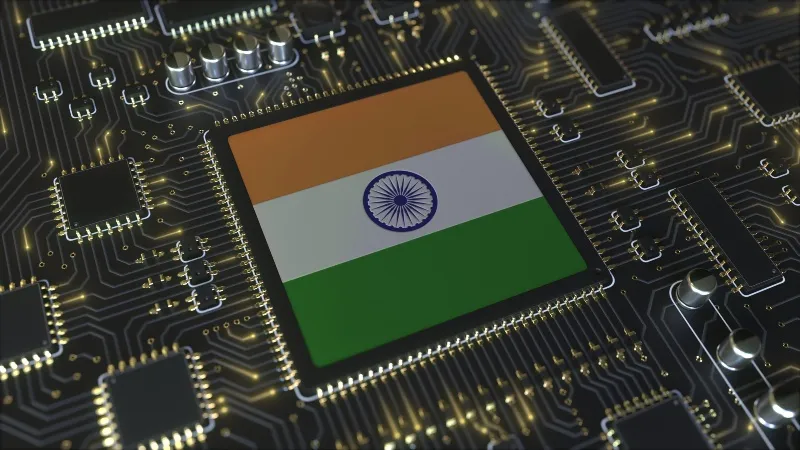
India’s Push for Semiconductor Manufacturing
How India is racing to become a global chip powerhouse — the strategy, the scale, the players and the road ahead
In an era where semiconductors are often described as the “digital diamonds” of the 21st century, Indian Space Research Organisation, Tata Electronics, Foxconn, and many others are gearing India up for a major leap in chip manufacturing. This blog gives a detailed professional overview of India’s semiconductor manufacturing ambitions — why it matters, how India is trying to get there, who the main actors are, what challenges remain, and what the future could look like.
1. Why Semiconductors Matter for India
1.1 Strategic Importance
Semiconductors lie at the heart of almost every modern technology — from smartphones to electric vehicles (EVs), telecom networks, defence systems and even renewable energy platforms. As India currently imports a very large share of its chips and components, domestic manufacturing is considered essential for technological sovereignty, supply-chain resilience and strategic security.
For example, the Indian government has described non-fossil energy and advanced manufacturing (including chips) as twin pillars of its vision of a self-reliant (“Atmanirbhar”) India. The Economic Times+1
1.2 Economic Opportunity
The global semiconductor market is massive and growing. Countries that build a strong foothold in chip manufacturing stand to gain from high-value exports, domestic job creation, ecosystem development (e.g., design, fabrication, packaging), and integration with global supply chains. India’s ambition is to tap into this growth — complementing its large domestic electronics and automotive market, as well as its strong capabilities in chip design services. India Briefing+1
1.3 Addressing Import Dependence
India is heavily reliant on imports for chips, especially mid- to high-end and specialty semiconductors. By building fabs (fabrication plants), OSAT (outsourced semiconductor assembly & test) units, display driver chips and packaging operations, India aims to reduce this dependency, strengthen its electronics manufacturing base and improve its global bargaining position. India Briefing+1
1.4 Upgrading Industrial Ecosystem
Semiconductor manufacturing triggers development in upstream and downstream segments: raw materials (gases, chemicals), tool-making, precision manufacturing, design services, clean-room construction, infrastructure (power, water, logistics). For India this is not just about chips, but upgrading industrial capability and skill sets. Invest UP
2. India’s Strategic Roadmap: Key Policies & Programs
2.1 India Semiconductor Mission (ISM)
The key anchor of India’s strategy is the India Semiconductor Mission (ISM).
-
Approved with an outlay of ₹76,000 crore (approximately US $9-10 billion) to build a semiconductor and display manufacturing ecosystem. Press Information Bureau+1
-
Under ISM, incentives include: up to 50% fiscal support (pari-passu) for setting up fabs, display fabs, compound semiconductors, silicon photonics, sensors, ATMP/OSAT facilities. Press Information Bureau
-
A “Design Linked Incentive” (DLI) scheme supports chip design up to 50% of eligible expenditures, plus a “Deployment Linked Incentive” of 4-6% of net sales turnover for five years. Press Information Bureau
-
ISM targets to build manufacturing capacity and integrate India into global semiconductor supply chains. Press Information Bureau
2.2 Production-Linked Incentive (PLI) & Display/Component Schemes
Beyond ISM, India has expanded PLI schemes for electronics manufacturing, components, display panels, including semiconductors. These measures encourage large-scale investment, localization of production, and exports. India Briefing
2.3 State-Level Incentives & Cluster Approach
Many Indian states (Gujarat, Uttar Pradesh, Assam, Odisha etc) are offering land, power, water, tax breaks, and setting up electronics/semiconductor clusters. This state-level backing is essential for large fab plants which require multi-year infrastructure readiness. Invest UP
2.4 Skill Development & Design Ecosystem
India is leveraging its existing strength in chip design (around 20% of global chip-design engineers are in India) and building new infrastructure for skill development in VLSI, packaging, OSAT, EDA tools etc. The Economic Times
2.5 Global Partnerships
India is also tying up with other countries and firms — e.g., toolmakers (Lam Research investing in India) and global chip-makers providing manufacturing or design collaboration. These partnerships help in technology transfer, ecosystem development and credibility. Reuters
3. Key Projects and Industry Players in Motion
3.1 Fabrication Plants (Fabs)
-
A joint venture between Tata Semiconductor Manufacturing (TSMC/PwrChip partner) in Gujarat’s Dholera region is targeted at 50,000 wafers/month capacity and investment around ₹91,000 crore. Moneycontrol+1
-
A joint venture between HCL Technologies and Foxconn in Jewar (Uttar Pradesh) was approved to build a display-driver chip plant (20,000 wafers/month) in 2025. India Briefing+1
3.2 OSAT / ATMP / Packaging Units
-
For example, an ATMP facility by Micron Technology in Sanand, Gujarat (US $2.75 billion) is being built for assembly, test, marking and packaging operations. LinkedIn
-
Kaynes Semicon Pvt Ltd in Gujarat for OSAT and compound semiconductor facility (investment around ₹3,300 crore) producing ~6.33 million chips/day. India Briefing
3.3 Design and Intellectual Property (IP) Focus
India is not just chasing manufacturing; it is strengthening its chip-design capability. The ISM’s DLI scheme supports design houses, MSMEs, startups working on analog, mixed-signal, RF, sensors, display driver chips. Outlook Business
3.4 Equipment, Materials and Support Industry
Semiconductor manufacturing requires a broad ecosystem: tool makers, gases, chemical supplies, clean-room construction, packaging materials, etc. India aims to develop domestic capabilities in these segments as well. Invest UP
4. What India Has Achieved So Far
-
As of May 2025, six semiconductor manufacturing projects had been approved with cumulative investment over ₹1.55 lakh crore (approx US$19-20 billion) under ISM. India Briefing+1
-
India expects to roll out its first indigenous “Made-in-India” chip (28-90 nm technology) by end of 2025. mint+1
-
Design-capability strength: around 20% of global chip-design engineers based in India. The Economic Times
-
Global investment interest: e.g., Lam Research (US tool maker) committed over US$1 billion investment in Karnataka state as part of ecosystem build-up. Reuters
-
State governments like Odisha are signing MoUs worth thousands of crores for semiconductors and electronics sub-industries. The Times of India
5. Challenges That Need to Be Addressed
5.1 High Capital Costs and Long Gestation
A full-scale modern fab can cost several billions of dollars and take years to become operational. While India has started many projects, the pace and scale must match global competition. Moneycontrol
5.2 Technology Node Gap
Many advanced fabs today operate at extremely small nodes (5 nm, 3 nm) which require advanced R&D and supply chains. India’s initial focus (28-90 nm) is realistic, but to compete globally long-term, India must evolve toward smaller nodes. mint
5.3 Ecosystem Readiness
Manufacturing semiconductors isn’t just about fabs: you need tool-makers, supply chains, raw materials, chemicals, packaging industry, waste treatment, skilled labour, stable power/water. India must continue building this ecosystem across states.
5.4 Skilled Workforce and Talent
While design capability is strong, manufacturing skills (clean-room technicians, fab operators, packaging specialists) are still being developed. Skill gaps could slow project readiness. Reddit
5.5 Land, Power, Infrastructure & Logistics
Fabs require uninterrupted power, ultra-pure water, logistics for gases/chemicals, land with strong connectivity. Ensuring all states offer such infrastructure is a non-trivial logistical challenge.
5.6 Global Competition & Geopolitics
Countries like Taiwan, South Korea, US, China, and Singapore are already established in semiconductor manufacturing. For India, attracting global firms and integrating into supply chains means contending with competitive incentive regimes elsewhere.
5.7 Supply Chain Dependencies
Many components, raw materials and tools in semiconductor manufacturing are themselves globally sourced; moving those supply chains into India takes time, effort and investment.
6. Impact across Sectors: Why It Matters Beyond Chips
6.1 Electronics & Mobile Manufacturing
With more chips made in India, the smartphone and electronics manufacturing ecosystem gets a stronger domestic anchor. Local value‐addition rises, import dependence falls.
6.2 Automotive & EVs
Chips are vital for EVs, smart vehicles, autonomous features, power electronics. With domestic chips, India’s automotive sector can move toward more localisation and cost competitiveness.
6.3 Defence & Aerospace
Semiconductor self-reliance strengthens national security: indigenous chips reduce dependency, enhance trust, support strategic industries.
6.4 Renewable Energy & Clean Tech
Semiconductors power solar inverters, wind turbines, grid electronics, smart meters. Domestic capacity supports the energy transition and India’s green-growth ambitions.
6.5 Job Creation & Regional Development
Large fab units create high-skilled jobs and ancillary industries. Regions like Gujarat, Assam, Uttar Pradesh, Odisha are being targeted — promoting regional economic balance and development.
7. The Road Ahead: What to Watch in the Next 3-5 Years
-
Operationalisation of key fabs: The next few years will be critical — when the first units begin production (2025-2027) will test India’s ability to keep pace.
-
Node advancement: Progress from 28-90 nm to smaller nodes (14 nm, 7 nm) will be an indicator of global competitiveness.
-
Ecosystem maturity: Growth in packaging, OSAT, tool-making and local component manufacturing are signs of deeper ecosystem readiness.
-
Export growth: As domestic manufacturing rises, chip exports from India to global markets will signal success.
-
Supply chain integration: Partnerships with global firms, localisation of materials & tools, and India’s role in global supply chains.
-
Innovation & IP: As design strength grows, Indian firms producing their own IP, creating high-value chips, will mark a shift from manufacturing to innovation.
-
Policy continuity & states’ role: Consistent policy, state-level facilitation, land/infra transparency and long-term stability will matter a lot.

