



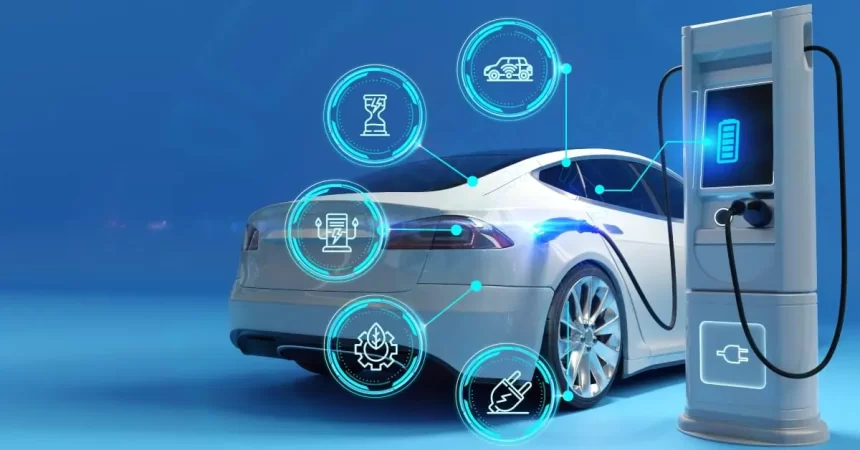
The Future of Electric Mobility in India: Driving Towards a Sustainable Tomorrow
Introduction
India stands at the crossroads of a major transportation revolution. As the world shifts toward cleaner, more sustainable energy solutions, electric mobility (e-mobility) has become the key to transforming how people and goods move. With the government’s strong policy push, rising fuel costs, and growing environmental awareness, Electric Vehicles (EVs) are no longer a distant dream — they are rapidly becoming a part of everyday Indian life.
Over the past few years, India has seen a surge in EV adoption, from electric two-wheelers zipping through city streets to electric buses powering urban transit systems. According to NITI Aayog, India aims for 30% of all vehicles to be electric by 2030, reflecting a powerful commitment to sustainability and innovation.
This blog explores in detail how electric mobility is shaping India’s transport landscape — its growth drivers, challenges, major players, government initiatives, and what the future of EVs in India looks like.
1. The Need for Electric Mobility in India
India’s dependence on fossil fuels is one of the biggest reasons for exploring alternative modes of transportation. With over 300 million registered vehicles, the country faces severe problems like air pollution, oil import dependency, and urban congestion.
Key Drivers Behind the EV Push:
-
Environmental Concerns:
India is home to 14 of the world’s 20 most polluted cities. EVs emit zero tailpipe emissions, helping reduce greenhouse gases and urban pollution. -
Rising Fuel Costs:
Fluctuating petrol and diesel prices have made electric vehicles more cost-effective in the long run. -
Energy Security:
India imports nearly 85% of its crude oil. Switching to EVs can save billions in foreign exchange annually. -
Global Climate Commitments:
India’s pledge at COP26 to achieve Net Zero Emissions by 2070 places clean mobility at the center of climate strategy.
In short, electric mobility is not just a technological shift — it’s a national necessity for economic and environmental sustainability.
2. India’s EV Growth Story So Far
The electric mobility revolution in India began modestly but has gained remarkable momentum in recent years.
Growth Highlights:
-
Over 2.5 million EVs are currently registered across India (as of 2025).
-
The EV market is projected to reach USD 113 billion by 2030.
-
The two-wheeler and three-wheeler segments dominate with over 80% of total EV sales.
-
Public and shared mobility (like e-buses and e-rickshaws) are seeing rapid adoption in metro cities.
States like Maharashtra, Delhi, Tamil Nadu, and Karnataka have become EV innovation hubs, offering policy incentives and infrastructure support to manufacturers and startups.
3. Government Initiatives Driving Electric Mobility
The Government of India has taken several proactive measures to make EV adoption faster and more viable.
3.1 FAME India Scheme (Faster Adoption and Manufacturing of Hybrid and Electric Vehicles)
The FAME scheme, launched by the Ministry of Heavy Industries, is the backbone of India’s EV policy framework.
Key Features:
-
FAME I (2015-2019): Focused on demand creation through incentives for hybrid and electric vehicles.
-
FAME II (2019-2025): Extended support for public transport (electric buses), charging infrastructure, and private EVs.
Under FAME II:
-
Over 7,000 e-buses and 5 lakh e-two-wheelers have been approved for subsidy.
-
Nearly 3,000 charging stations have been sanctioned across India.
3.2 Production Linked Incentive (PLI) Scheme
To strengthen the EV manufacturing ecosystem, the government introduced the PLI Scheme for:
-
Advanced Chemistry Cell (ACC) batteries, and
-
Automobile & Auto Components sectors.
This encourages domestic production of EV parts and reduces dependency on imports, especially from China.
3.3 Battery Swapping Policy
Announced in the Union Budget 2022, this policy promotes battery swapping stations where users can replace discharged batteries with fully charged ones. This reduces vehicle downtime and makes EVs more practical for urban fleets.
3.4 State-Level EV Policies
Several Indian states have launched their own EV policies offering road tax exemptions, registration fee waivers, and direct purchase incentives.
For example:
-
Delhi: 100% road tax exemption and up to ₹30,000 subsidy on e-two-wheelers.
-
Maharashtra: Incentives for EV manufacturers and buyers.
-
Tamil Nadu: Special EV industrial parks to attract investments.
These state policies complement national initiatives, creating a supportive environment for EV growth.
4. The Rise of Electric Two-Wheelers and Three-Wheelers
In India, two-wheelers and auto-rickshaws dominate daily transportation, making them natural candidates for electrification.
4.1 Electric Two-Wheelers
Brands like Ola Electric, Ather Energy, TVS, Bajaj, and Hero Electric are leading the charge.
Advantages:
-
Lower running cost (₹0.25 per km vs ₹2 for petrol scooters).
-
Easy charging at home.
-
Government subsidies lowering upfront prices.
Electric scooters have become especially popular among urban youth and delivery fleets.
4.2 Electric Three-Wheelers (E-Rickshaws)
E-rickshaws are transforming urban and semi-urban mobility. Cities like Delhi, Lucknow, and Patna are witnessing thousands of e-rickshaws on roads every day.
Why They’re Important:
-
Affordable last-mile connectivity.
-
Zero tailpipe emissions.
-
Easy financing and battery-swapping support.
According to reports, India is the world’s largest market for electric three-wheelers, accounting for more than 80% of global sales in this segment.
5. Electric Cars and Commercial Vehicles: The Next Big Leap
While two and three-wheelers lead the adoption race, the electric car and commercial vehicle segments are catching up rapidly.
5.1 Electric Cars
Leading manufacturers like Tata Motors, Mahindra, MG Motors, and BYD India are making EVs more accessible to middle-class consumers.
Popular models like Tata Nexon EV, Tiago EV, and MG ZS EV are changing perceptions by offering:
-
250–500 km range per charge.
-
Fast charging options.
-
Lower maintenance costs.
Tata Motors alone accounts for over 80% of India’s EV car market share, showcasing strong domestic innovation.
5.2 Electric Buses and Trucks
Public transport is undergoing a silent revolution.
Cities like Delhi, Bangalore, and Hyderabad have already introduced electric bus fleets under FAME II support.
Benefits:
-
Lower noise and pollution.
-
Reduced operational costs.
-
Better air quality in urban areas.
Commercial electric trucks are also on the horizon, with startups like EVage and Omega Seiki Mobility developing cargo EVs for logistics and last-mile delivery.
6. Charging Infrastructure: The Backbone of EV Adoption
A major challenge for EV adoption is charging infrastructure. Without adequate charging points, range anxiety remains a concern for potential buyers.
India’s Progress:
-
As of 2025, India has more than 12,000 public charging stations, with thousands more being installed every year.
-
Oil companies like IndianOil, HPCL, and BPCL are integrating EV chargers into fuel stations.
-
Private companies like Tata Power, Statiq, Ather Grid, and ChargeZone are expanding networks across highways and cities.
The future will also see:
-
Ultra-fast DC chargers (150–350 kW) reducing charging time to 15–30 minutes.
-
Home and workplace chargers becoming standard features in residential complexes.
By 2030, India aims to have 1 charging station for every 25 EVs, ensuring convenience and confidence for all users.
7. The Role of Battery Technology
Batteries form the heart of any EV. Currently, lithium-ion batteries dominate, but India is investing in advanced technologies to enhance performance and reduce costs.
Key Innovations:
-
Solid-state batteries for higher energy density and safety.
-
Sodium-ion and zinc-air batteries for cost-effective alternatives.
-
Recycling and second-life battery programs for sustainability.
India’s PLI scheme for Advanced Chemistry Cells (ACC) aims to establish 50 GWh of domestic battery production capacity, reducing import dependency and making EVs more affordable.
8. The Private Sector and Startups: Powering the EV Revolution
India’s startup ecosystem is playing a crucial role in accelerating EV innovation.
Leading Players:
| Category | Startups/Companies | Focus Area |
|---|---|---|
| Electric 2-Wheelers | Ola Electric, Ather, Tork Motors | Smart, connected scooters |
| Charging Infrastructure | Statiq, ChargeZone, Magenta | EV charging solutions |
| Battery Tech | Exicom, Log9 Materials, Amara Raja | Fast-charging, advanced cells |
| Commercial EVs | Euler Motors, Omega Seiki, EVage | Cargo and logistics vehicles |
With growing investor interest, these startups are attracting billions in funding and creating jobs across R&D, manufacturing, and services.
9. Challenges Hindering EV Adoption
While the progress is impressive, several challenges remain on India’s road to an electric future.
Key Barriers:
-
High Upfront Costs:
EVs are still costlier than petrol or diesel vehicles due to expensive batteries. -
Charging Infrastructure Gaps:
Rural and tier-2 cities still lack adequate charging networks. -
Battery Recycling and Disposal:
Sustainable recycling mechanisms are yet to mature. -
Grid Load Management:
The increased electricity demand may strain power grids without smart management systems. -
Consumer Awareness:
Many buyers are still skeptical about battery life, resale value, and long-term savings.
Addressing these challenges through policy innovation, R&D investment, and awareness campaigns will be critical for long-term success.
10. The Road Ahead: India’s EV Vision for 2030 and Beyond
India’s Vision 2030 for electric mobility is ambitious yet achievable. The roadmap focuses on creating a complete EV ecosystem encompassing manufacturing, charging, recycling, and skill development.
Key Goals by 2030:
-
30% of new vehicles sold to be electric.
-
70% commercial vehicles, 40% buses, and 80% two- and three-wheelers to go electric.
-
Net reduction of 846 million tonnes of CO₂ emissions.
-
Creation of 10 million direct and indirect jobs in the EV industry.
India is also exploring hydrogen fuel cell vehicles (FCEVs) and smart grid integration to complement the EV revolution.
11. Global Collaboration and Future Opportunities
India is partnering with leading countries like Japan, South Korea, and the US for R&D in battery materials, charging standards, and EV policy frameworks.
Companies like Tesla, BYD, and VinFast have also shown growing interest in entering the Indian market, further boosting competition and innovation.
With a large domestic market, skilled engineers, and a supportive policy environment, India has the potential to become a global hub for affordable and sustainable electric mobility.

