The wild is full of nocturnal animals. But did you know that some animals can survive easily in total darkness? Many reported species continue to live in regions where sunlight never reaches. Over the years of evolution, these animals have adapted perfectly. Some found the solution in eyelessness, pale or translucent bodies, and some in heightened non-visual senses to navigate caves, deep oceans, and underground burrows. Here are 8 such animals that became the masters of the dark!
This cave salamander has regressed eyes and relies on electroreception to sense prey in total darkness. Its skin is sensitive to chemical changes in water, which helps it locate food and mates. Olms have a remarkably slow metabolism and can live up to 100 years, making them one of the longest-living vertebrates adapted to darkness.
This eyeless and translucent amphibian uses chemical cues to detect its surroundings. It also has a flattened head and a highly developed lateral line system to navigate the narrow, dark channels of underground aquifers. Despite its fragile appearance, it is a skilled predator in its hidden watery world.
These fish lack functional eyes and pigmentation and rely entirely on vibrations sensed through their lateral line system. They also have heightened senses of taste and smell to detect food, which gives them an edge in the pitch-black cave environment. Some populations even exhibit schooling behaviour to coordinate movement in total darkness.
Eyeless and pale, this spider hunts rare amphipods in underground lava tubes using highly sensitive leg hairs and vibrations. It also has elongated legs to navigate uneven surfaces in total darkness, and its low-energy metabolism enables it to survive on limited prey.
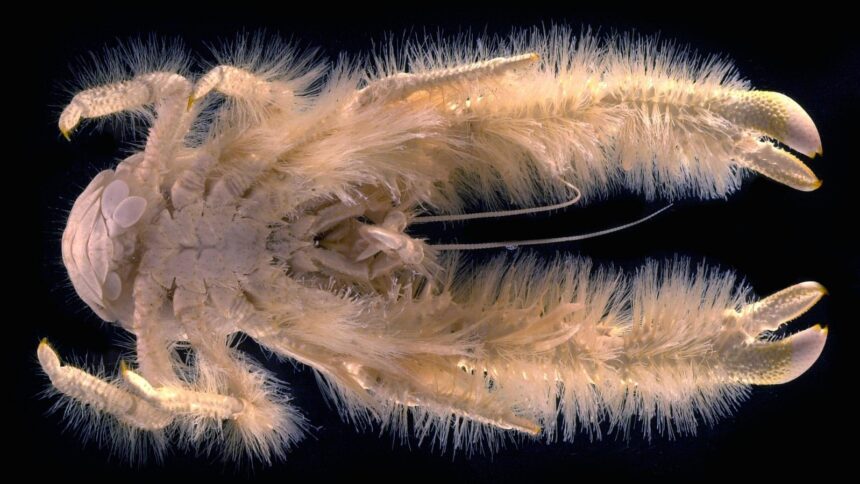
Yeti crab is found deep in the ocean’s murky depths at 2,200 meters. It farms bacteria on its hairy arms for food — easily thriving at depths where no sunlight penetrates. It also has specialised sensory hairs to detect chemical changes in vent waters, allowing it to locate new feeding sites and avoid predators.
Living over 8,000 meters underwater, this translucent fish survives crushing pressure and total darkness in the It has soft, flexible bones and gelatinous tissues that help it withstand the extreme environment. Its slow movements and energy-efficient hunting strategy make it perfectly suited for a lightless world.
This underground mammal uses its star-shaped nose, packed with over 100,000 nerve endings, to detect prey in dark soil. It can identify and eat prey in as little as 120 milliseconds. Star-nosed moles also dig extensive burrow networks and use their sensitive snouts to navigate tunnels completely blind.
In oxygen-poor, lightless waters, the vampire squid feeds on detritus while avoiding predators using a cloud of bioluminescent mucus. Its large eyes, adapted to very low light, help it detect faint flashes, while its webbed arms allow it to move silently in the dark. This living fossil has survived millions of years with minimal changes, proving its strategy works.